Research Blog · 88+ Training Runs · March 2026

Every run logged.
Every number real.

FP8 gradient underflow, LoRA overfitting, antifragile training on NVIDIA Blackwell. We ran the experiments so you don't have to guess.

33×
Overfitting reduction
5.2%
FP8 quality loss (was 68%)
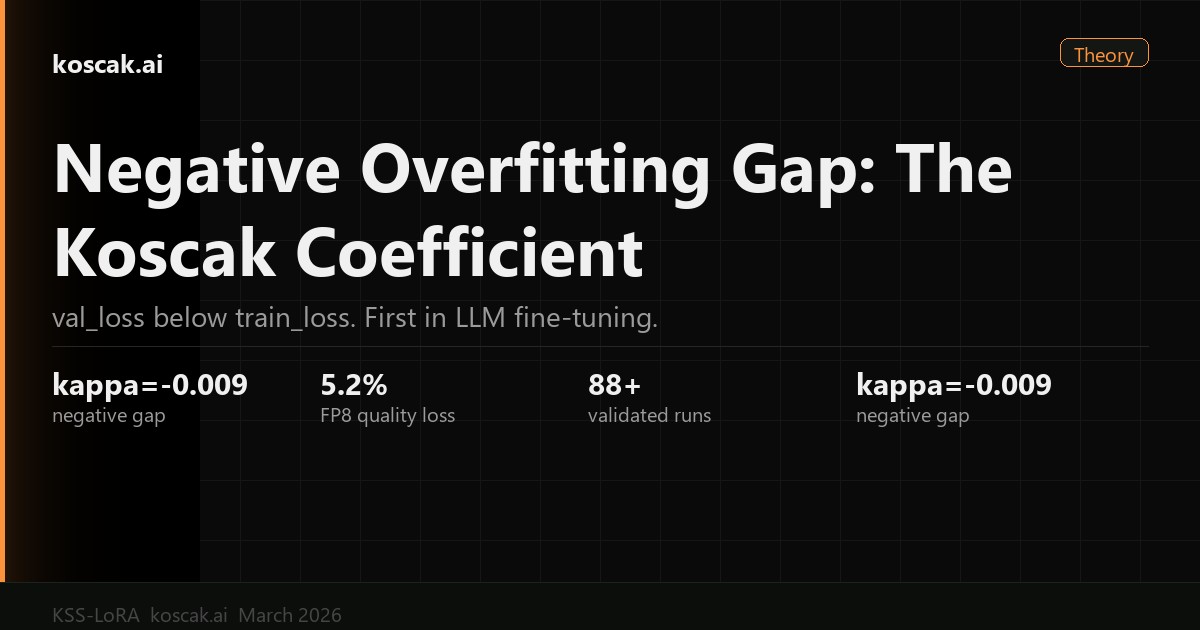
κ = −0.009
Negative gap confirmed
94.7%
Gap drop · 50% noise
88+
Validated runs
Explore the labNOESISModel TrainingWeatherCyberSpaceBack us
Zero Bluffed Answers: How NOESIS Is Designed to Never Make Things Up
NOESIS

Zero Bluffed Answers: How NOESIS Is Designed to Never Make Things Up

Verify or abstain, running live: how a zero-LLM engine answers only what it can prove, and keeps its lie counter at zero.

One Sensor vs Three Global Models: Beating ICON, GFS and ECMWF
Weather

One Sensor vs Three Global Models: Beating ICON, GFS and ECMWF

One station, nine years of data, one Raspberry Pi - measured against the operational global models on held-out 2026 data.

Your Security Team Is Guessing: Why Findings Must Be Chained, Not Listed
Security

Your Security Team Is Guessing: Why Findings Must Be Chained, Not Listed

Scanner output is not an assessment. Chained-finding analysis under exact-or-abstain reporting - starting with a free scan.

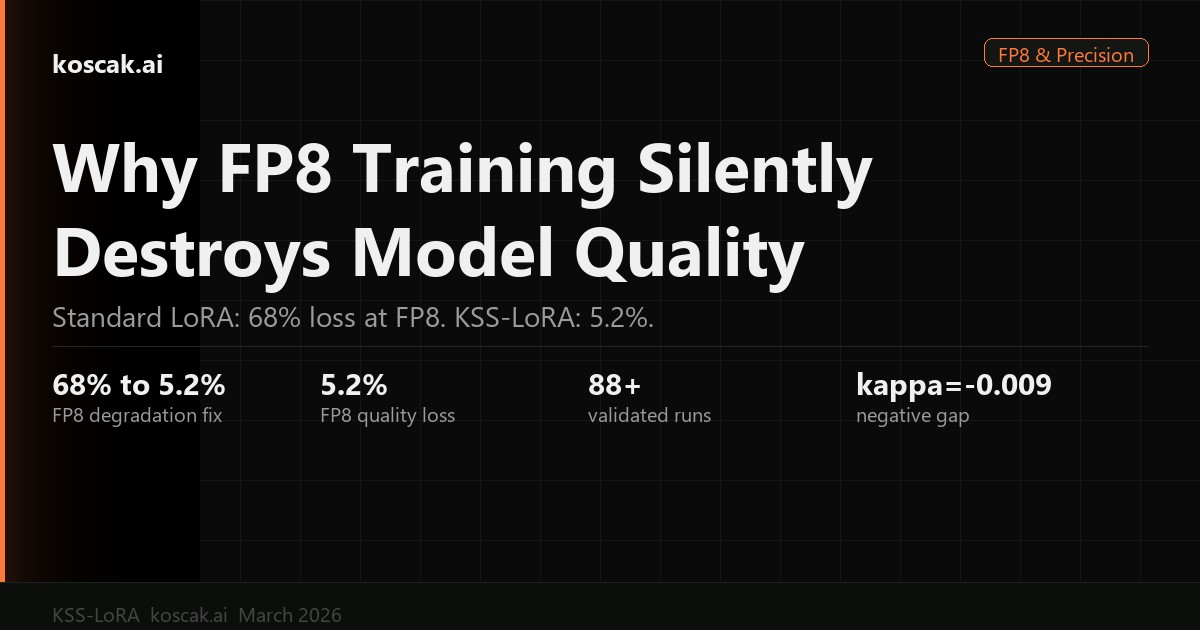
Why FP8 Training Silently Destroys Your Model Quality
FP8KSS-LoRA

Why FP8 Training Silently Destroys Your Model Quality

Standard LoRA at FP8 loses 68% quality without any warning signs. Here's the root cause and the fix.

→ Read
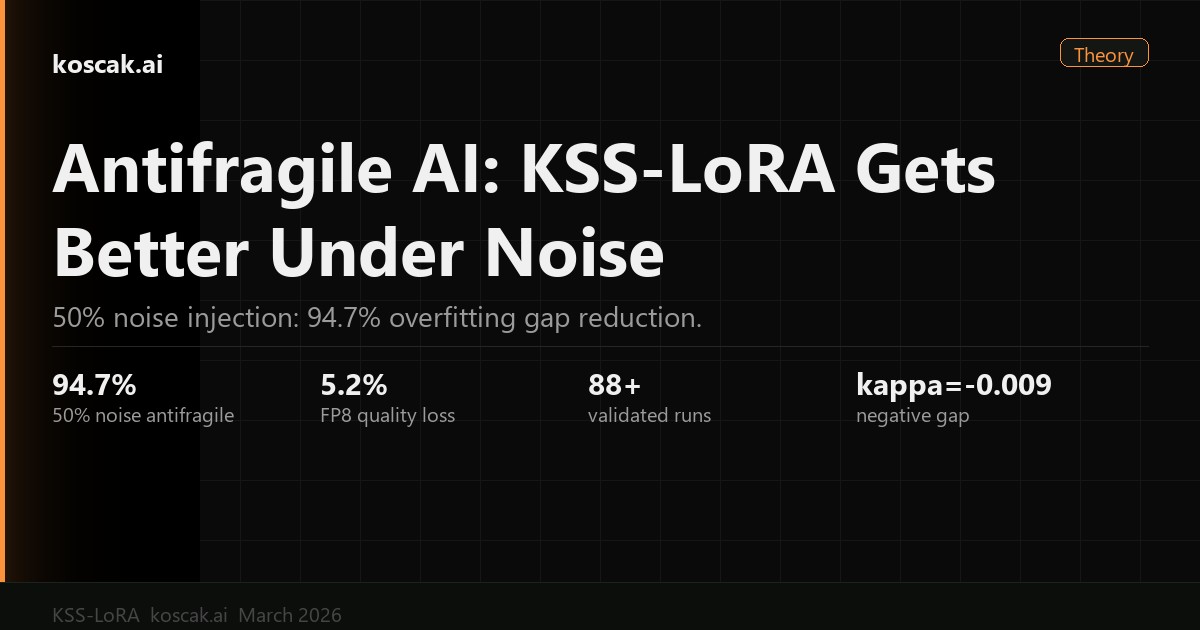
Antifragile AI: Why KSS-LoRA Gets Better With Noisy Training Data
AntifragileKSS-LoRA

Antifragile AI: Why KSS-LoRA Gets Better With Noisy Training Data

50% noise injection reduces the overfitting gap by 94.7%. Most methods break under noise. This one uses it as fuel.

→ Read
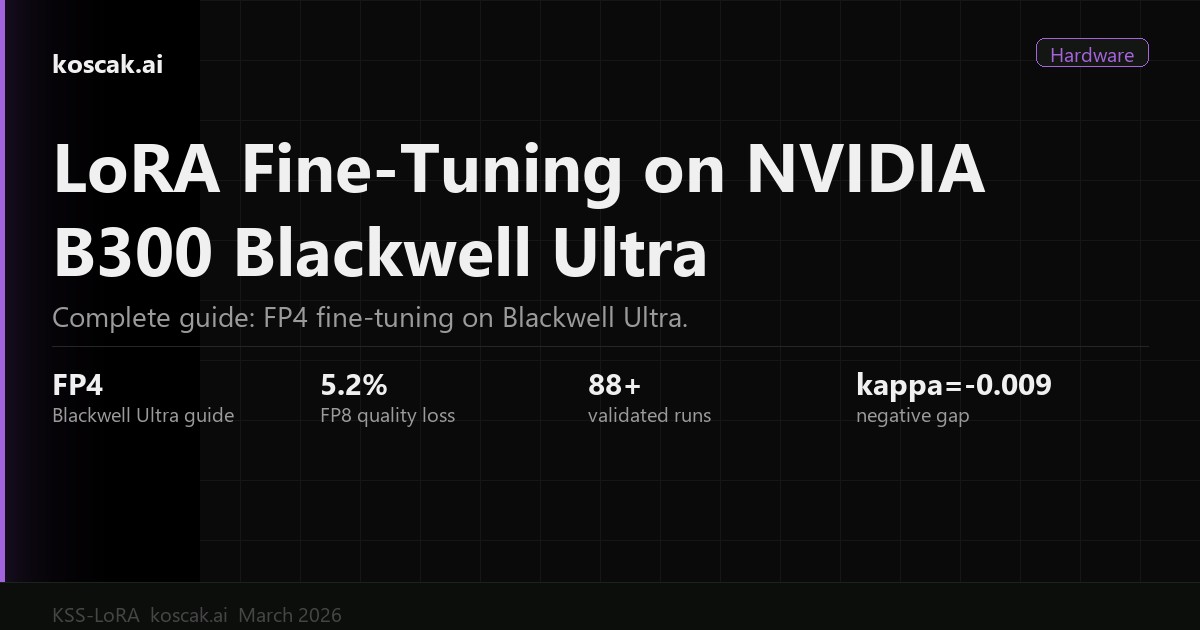
LoRA Fine-Tuning on NVIDIA B300 Blackwell Ultra: Full Guide
BlackwellGuide

LoRA Fine-Tuning on NVIDIA B300 Blackwell Ultra: Full Guide

Complete guide to fine-tuning on B300 Blackwell Ultra with FP4 precision. Setup, config, and results.

→ Read
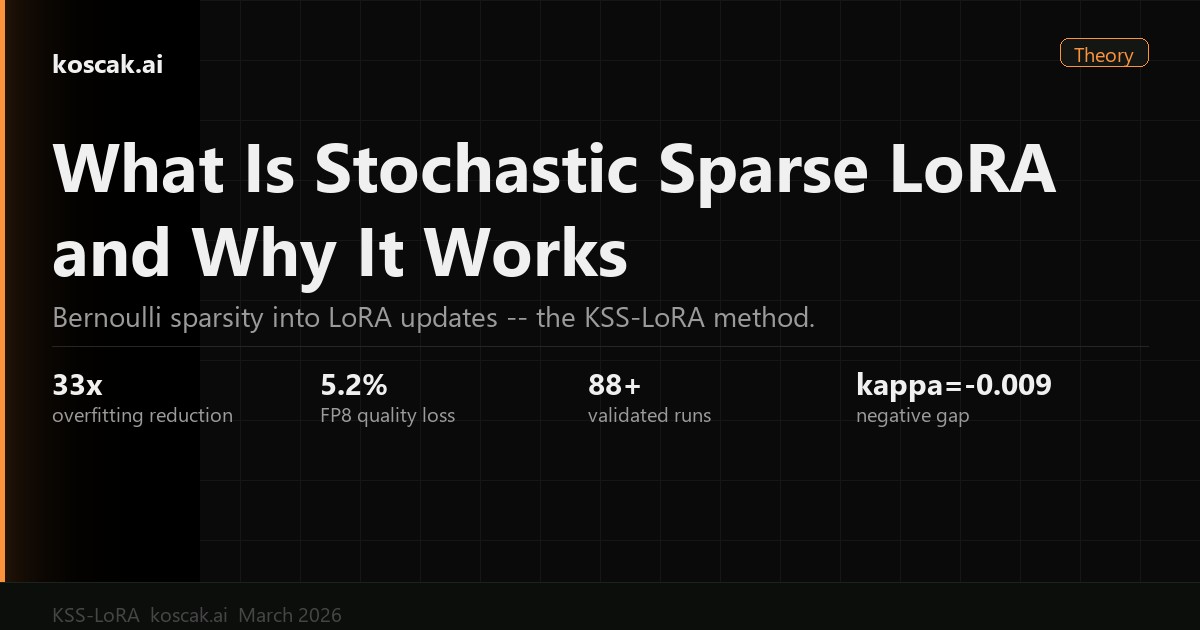
What Is Stochastic Sparse LoRA and Why Does It Work?
KSS-LoRATheory

What Is Stochastic Sparse LoRA and Why Does It Work?

The Bernoulli sparsity mechanism behind KSS-LoRA - and the math that makes it provably stable at any precision.

→ Read
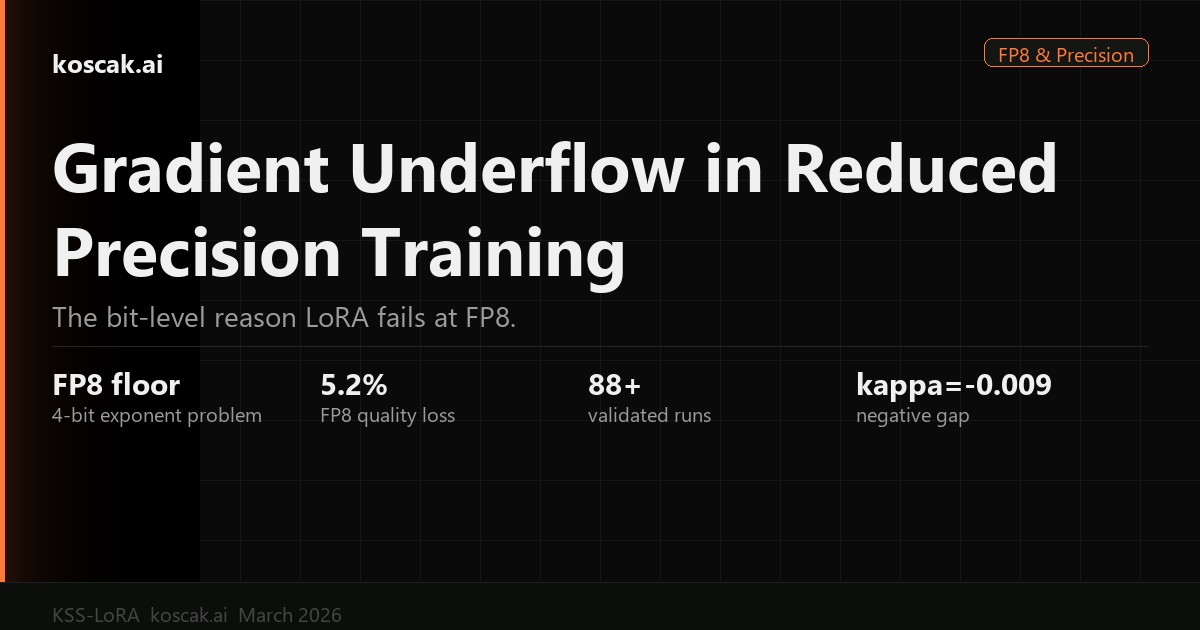
Gradient Underflow in Reduced Precision Training: A Deep Dive
FP8Deep Dive

Gradient Underflow in Reduced Precision Training: A Deep Dive

Why gradients vanish at FP8 and the cascading effect on model quality. The bit-level explanation.

→ Read
Overfitting in LLM Fine-Tuning: What the Loss Curve Isn't Telling You
BenchmarkLoRA

Overfitting in LLM Fine-Tuning: What the Loss Curve Isn't Telling You

Your validation loss looks fine. Your model is ruined. The hidden overfitting problem with exact numbers.

→ Read
NVIDIA Hopper vs Blackwell Architecture: Training Performance Breakdown
HardwareBenchmark

NVIDIA Hopper vs Blackwell: Training Performance Breakdown

H200 vs B300 - architecture differences that matter for fine-tuning, with real training metrics.

→ Read
NVIDIA B300 Blackwell Ultra: First Fine-Tuning Results
B300Results

NVIDIA B300 Blackwell Ultra: First Fine-Tuning Results and Scaling Curve

First published fine-tuning results on B300 - 7-model scaling curve from 1B to 72B parameters.

→ Read
Llama 3.1-8B Fine-Tuning: Best Practices in 2026
GuideLlama 3

Llama 3.1-8B Fine-Tuning: Best Practices in 2026

Everything from 88+ training runs on A100 and H200. The configs that matter and the ones that don't.

→ Read
The Hidden Cost of FP8 in Production AI Factories
FP8Production

The Hidden Cost of FP8 in Production AI Factories

Every hyperscaler running fine-tuning at FP8 scale is quietly losing quality. Here's the cost math.

→ Read
Qwen2.5-7B vs Llama 3.1-8B: Fine-Tuning Comparison
ComparisonGuide

Qwen2.5-7B vs Llama 3.1-8B: Fine-Tuning Comparison

46 identical experiments on both models. The numbers on which base model wins and when.

→ Read
HuggingFace PEFT: What the Docs Don't Tell You About LoRA
PEFTGotchas

HuggingFace PEFT: What the Docs Don't Tell You About LoRA

Default PEFT config works on A100. On H200 FP8 it silently destroys your model. Here's exactly what to change.

→ Read
LoRA Rank Sensitivity: How r Affects Your Training Outcome
LoRASensitivity

LoRA Rank Sensitivity: How r Affects Your Training Outcome

8 rank values tested across 46 runs. The optimal value and why bigger isn't better.

→ Read
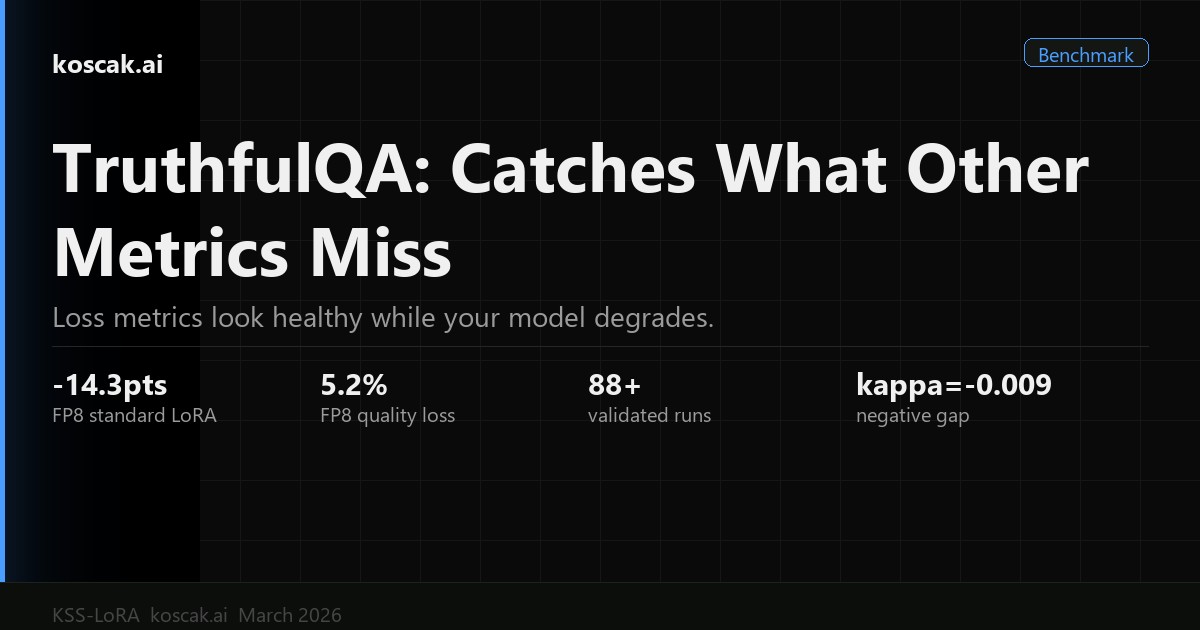
TruthfulQA as a Fine-Tuning Benchmark
BenchmarkTruthfulQA

TruthfulQA as a Fine-Tuning Benchmark: Why It Catches What Other Metrics Miss

Standard loss metrics look healthy while the model degrades. TruthfulQA catches it. Here's the data.

→ Read
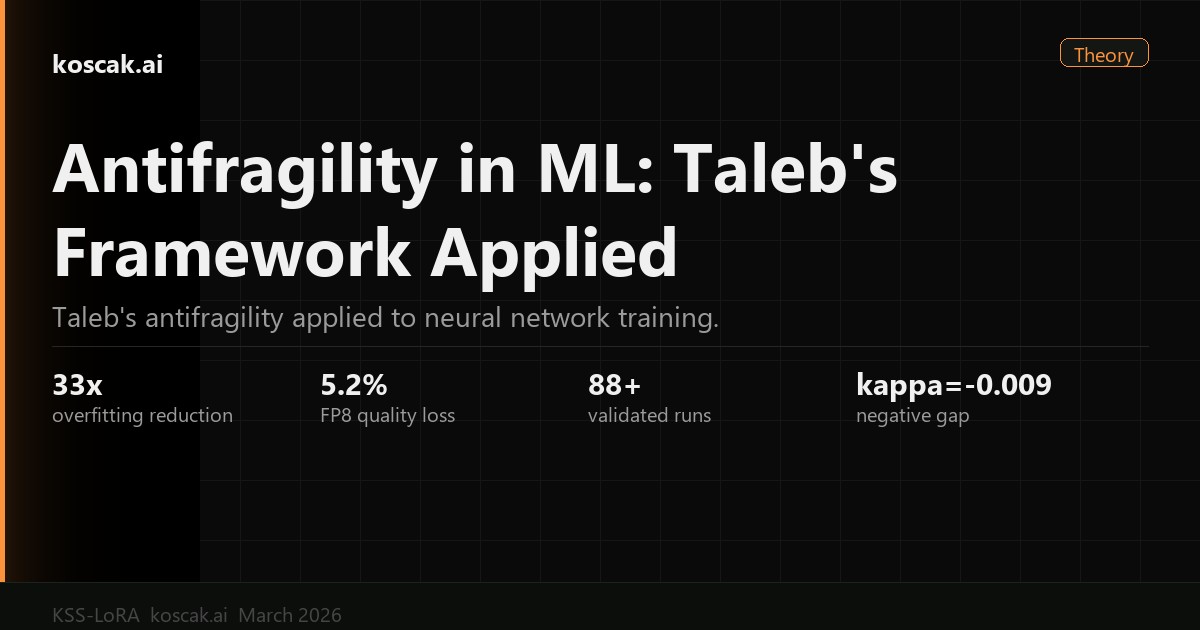
Antifragility in Machine Learning: Taleb's Framework
TheoryTaleb

Antifragility in Machine Learning: Taleb's Framework Applied to Neural Networks

Taleb's antifragility concept applied to training - and experimental proof it's achievable.

→ Read
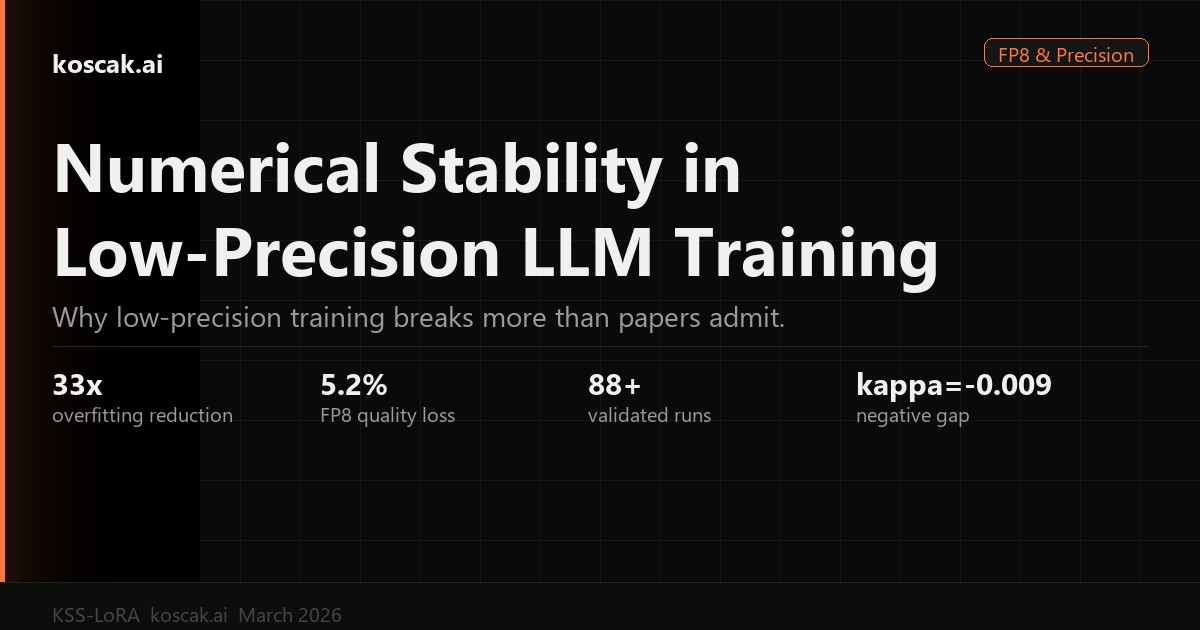
Numerical Stability in Low-Precision LLM Training
PrecisionGuide

Numerical Stability in Low-Precision LLM Training: A Practical Guide

Why low-precision training breaks more than the papers admit - and the constraints that fix it.

→ Read
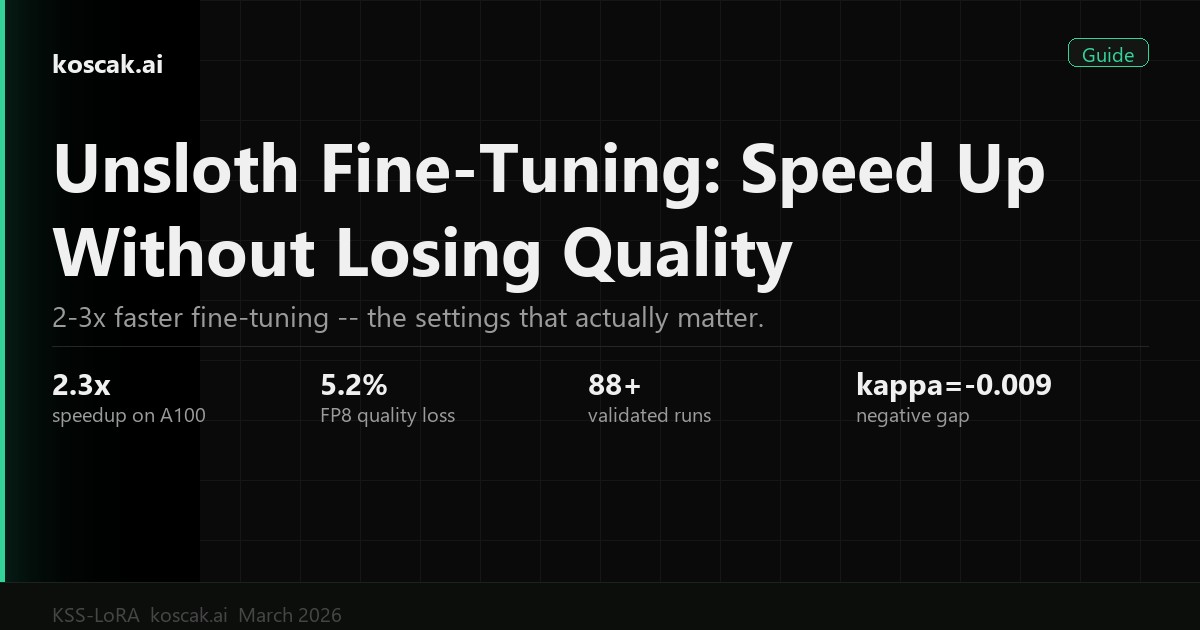
Unsloth Fine-Tuning Guide: Speed Up Training Without Losing Quality
GuideUnsloth

Unsloth Fine-Tuning Guide: Speed Up Training Without Losing Quality

2-3× faster fine-tuning - and the settings that actually matter vs ones you can ignore.

→ Read
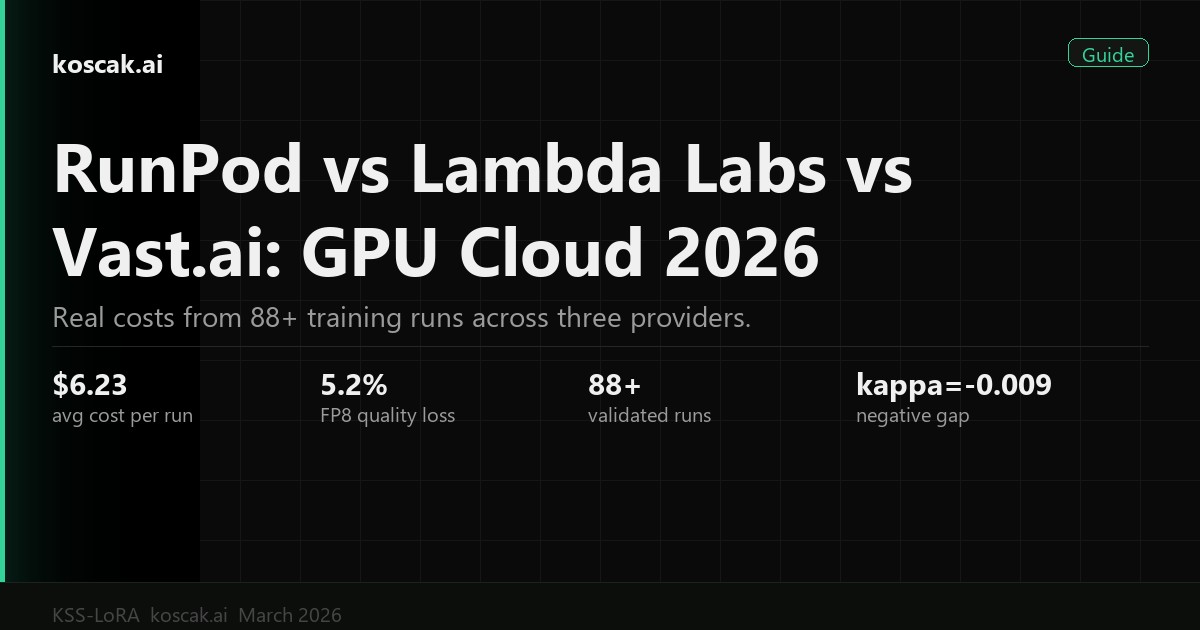
RunPod vs Lambda Labs vs Vast.ai: GPU Cloud for AI Training in 2026
Cloud GPUCost

RunPod vs Lambda Labs vs Vast.ai: GPU Cloud for AI Training in 2026

Real costs and real reliability after 88+ training runs across three providers.

→ Read